
In a recent post, I looked at what makes great teams truly great. It’s not just about talent, tactics, or leadership in Marketing structures. There’s something harder to define: shared belief, collective identity and the moments that bring people together as something bigger than themselves.
Last Thursday’s opening match of the 2026 Men’s Six Nations, France versus Ireland, was a powerful and very human example of this.
France won. And yes, I was very happy about it. But there’s more to the story than the final score when the whistle blows.
This match carried emotional weight even before it began. Last year, in the same match-up, France won but lost their captain and driving force, Antoine Dupont, to a serious injury. For almost a year, he was absent from the international stage, both physically and symbolically. His return last week was more than just a player coming back; it was the return of a central figure the team often relies on.
What fascinated me most wasn’t how France played with Dupont back, but what we learned from how they adapted to playing without him.
When someone like Dupont is missing, teams must face a tough question. Was he the whole system, or just its most visible part? Great teams get through these moments because leadership, responsibility, and belief are shared. Others step up. The core stays strong, even if the key player is gone for a while.
That kind of resilience isn’t just about tactics. It comes from identity. Which brings me to the anthem.
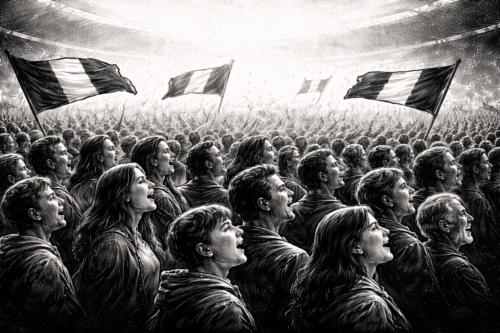
Anyone who has watched international rugby in France in recent years will recognise the change. The opening notes are supported by music, but they soon fade. What’s left is extraordinary: tens of thousands of voices, unaccompanied, loud, emotional, and united. In that moment, the anthem is no longer just a ceremony; it becomes something shared.
You can feel it in the stadium. You can feel it through the television. Players don’t just hear it; they are surrounded by it. It wraps around them, lifts them up, and reminds them who they represent and why they are there. Fans aren’t just spectators anymore; they become participants. Even people watching from home feel drawn into the same emotion.
What stands out to me is why it is so different at rugby games. I do know I am biased, but I don’t see this in other sports – or at least not with the same intensity. Rugby creates a different kind of silence before the singing, a different kind of respect. The anthem isn’t just background noise to rush through; it’s given space. And because of that, it means more.
At its best, rugby understands something important: shared vulnerability leads to shared strength. Standing still, listening, and singing together aren’t displays of power; they are acts of belonging.
The Welsh have always shown this to me. Few things in sports are as moving as a Welsh crowd singing their anthem. It feels natural, almost inevitable. Their long choral tradition explains some of it, of course, but beyond that, there’s a deep cultural comfort with singing together. It’s not just performance; it’s identity.
When that kind of moment happens, whether in Paris or Cardiff, something important takes place. The team is reminded it’s not alone. The crowd remembers its role. And everyone watching is briefly invited into a shared story.
Which brings us back to great teams.
Great teams aren’t defined only by their most brilliant individual, even if that person is exceptional. They are defined by what remains when that person is absent, and by the rituals, symbols, and moments that remind them who they are when the pressure is on.
Sometimes, that moment is a song.
Read reactions to this story on LinkedIn
Leave a Reply