
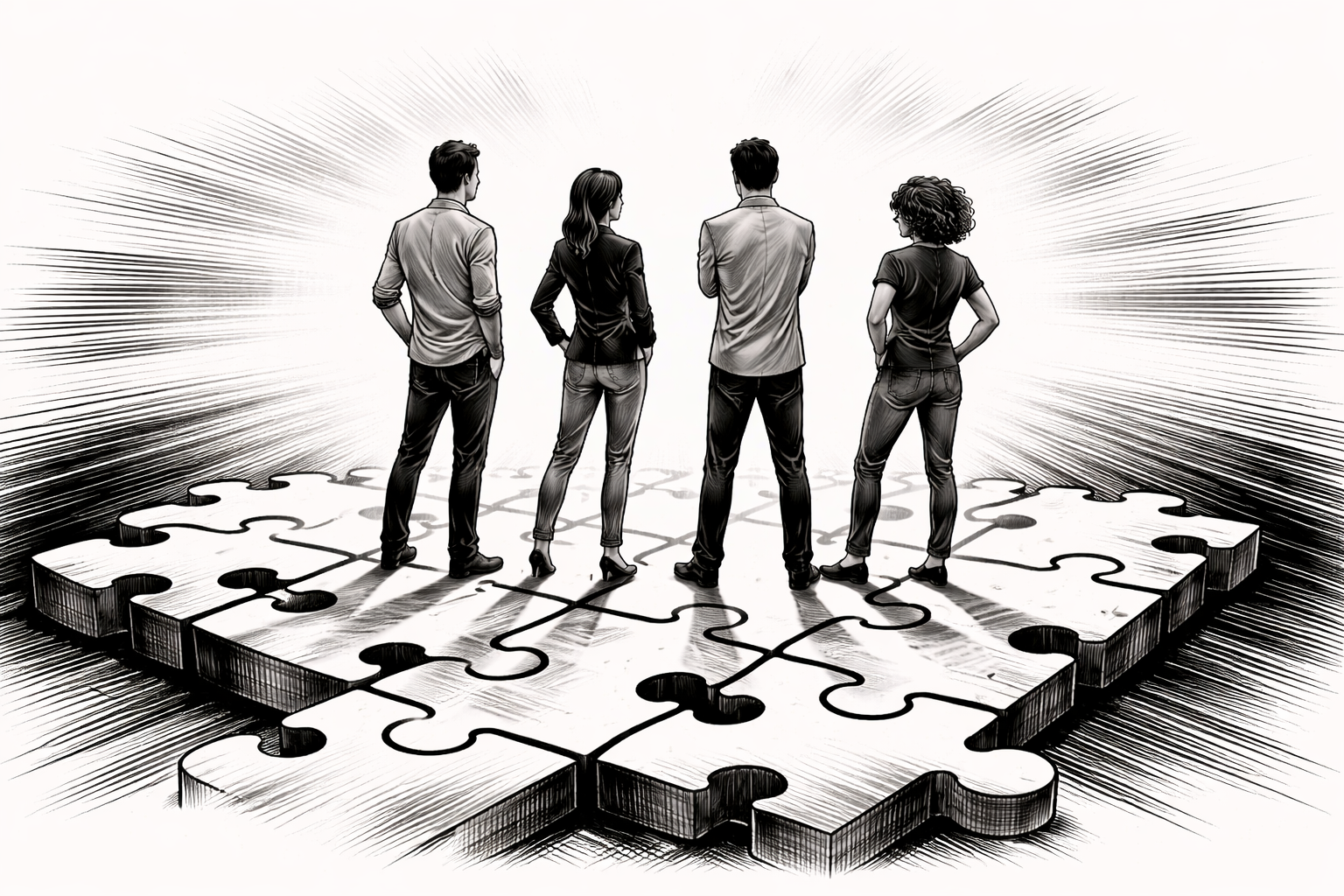
Recently, I took a break from the usual daily routine to spend two full days with my leadership team. There were no dashboards, no campaigns, and no urgent decisions – just time together to pause, reflect, and explore what really makes teams work well. For someone who loves dashboards as much as I do, the team was grateful for that short respite.
We don’t do this kind of activity often enough. In business, slowing down can feel risky, almost illicit, and like you might get left behind. But being able to pause and think, instead of just reacting, is what makes the best teams stand out.
While I was in that room, I started thinking about rugby. Partly because the Six Nations is about to start, but also because sports offer clear examples of collaboration, trust, and leadership.
The Balance Between Structure and Freedom
Great teams, whether in sports or in business, find a special balance between having rules and following their instincts.
- When everyone knows their role, it helps people feel confident about how they can help.
- Having clear rules and expectations sets the limits that help everyone stay consistent.
- Trust and freedom let people use their own judgement, creativity, and instincts.
The best teams know what they want to achieve and why. With that in place, people are encouraged to take action and come up with new ideas, instead of just waiting to be told what to do. This mix of working together and having freedom is created on purpose.
The Power of Difference: When Roles Truly Complement Each Other
When I discussed this on LinkedIn, someone in my network reminded me that Rugby is a great example of teamwork because of the wide range of roles on the field. Props, fly-halves, locks, and wingers each have different physical strengths, skills, and perspectives. Success comes not from everyone doing the same thing well, but from each player excelling in their own role to help the team reach a common goal.
At its best, a rugby team uses differences in a smart way. Strength makes room for speed. Rules allow for creativity. Planning depends on everyone doing their job well. When these things work together, the team is better than just adding up each person’s skills – a true example of 1 + 1 = 3.
The same idea works for great business teams. Teams do better when leaders stop trying to make everyone the same and instead focus on how different skills, viewpoints, and ways of working can help each other. Being a leader is not about getting rid of differences, but about bringing them together so the team is stronger, tougher, and more flexible than any one person could be.
Trust as the Team’s Currency
What stood out most in our conversations was how central trust is to performance.
Trust doesn’t just come from getting along. It is built by working together, helping each other, and being willing to be honest. Good teams don’t just accept differences; they use them, turning different ways of thinking into a strength instead of a problem.
This also shows how important it is to be tough. Teams who trust each other don’t fall apart when things get hard; they adjust, come together again, and keep going with confidence.
Intentional Reflection Creates Intentional Teams
Taking time to think about how we work is a skill. It’s easy to think that progress only comes from doing things, but moving ahead without stopping to think can send us in the wrong direction.
By deliberately creating space to examine our own dynamics:
- We articulate what success feels like.
- We recognise the behaviours that accelerate or impede progress.
- We lay the groundwork for meaningful collaboration.
That’s why taking time to reflect matters: it turns big ideas into real conversations we can use.
Beyond Talent: The Heart of Team Performance
One thing is clear: talent alone is not enough. The best teams don’t just bring together talented people; they help those individuals shift from working alone to achieving success together.A team that shares a goal, works hard, and cares about each other’s success is stronger than a team with just talent
Leave a Reply